

Grief, Clutter, and a Wooden Side Table: Helping a Friend Move Forward After Loss
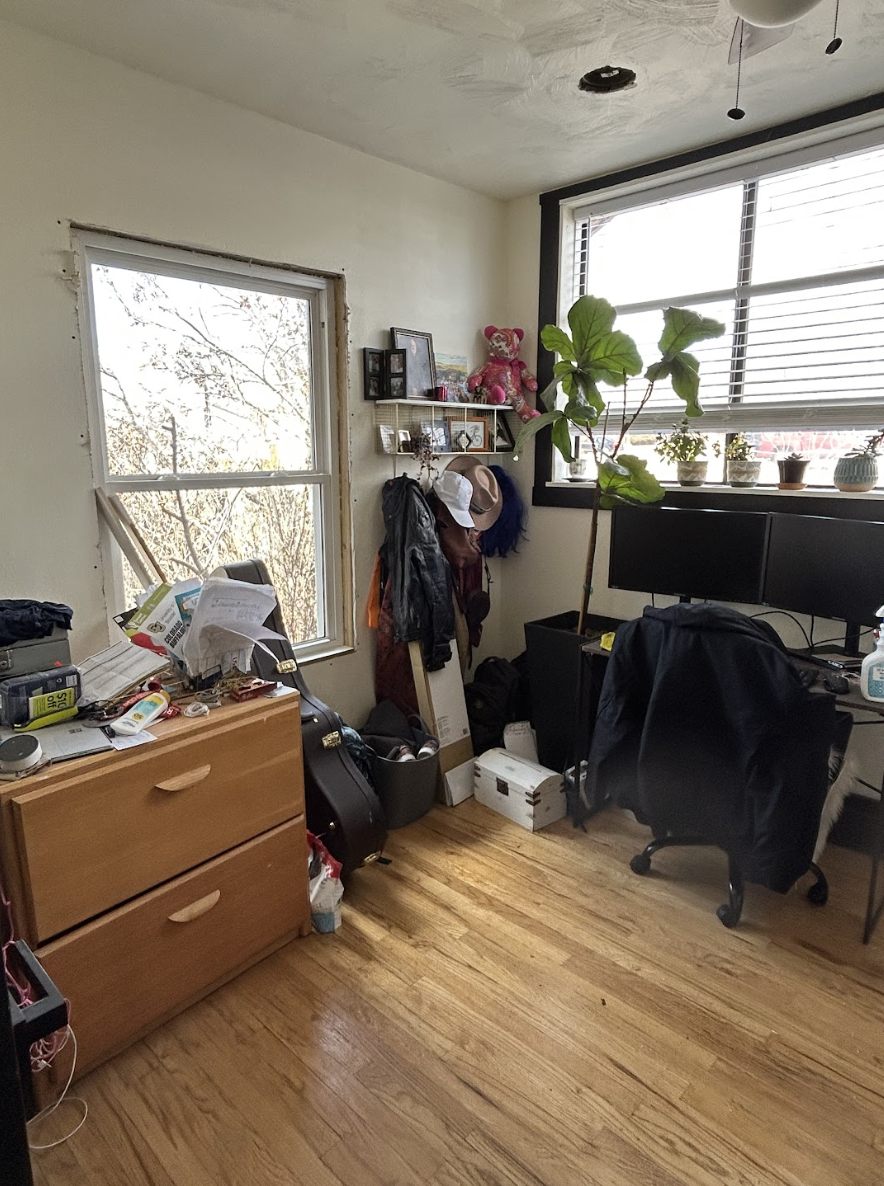

This was a special project for a close friend whose mother had recently passed away from cancer. In the weeks that followed, she inherited a number of her mom’s belongings—many deeply sentimental, and a few too big for her modest 1,000-square-foot home. Among them: a beautifully worn, wooden two-drawer side table that had lived beside her mother’s reading chair for decades.
She wanted to keep these pieces, but also wanted to breathe in her space again—to grieve, to work, to live. So we started where you often must in times like these: gently.
Start With Permission
When someone inherits a loved one’s things, it’s rarely just about the stuff. It’s about memories, identity, and sometimes guilt. My friend needed to know it was okay not to keep everything. That letting go didn’t mean letting go of her mom.
So we walked through her space, room by room. We asked: Does this item hold deep meaning? Does it serve a purpose in your life today? Can we honor it in a way that doesn’t take up square footage?
Sort and Sift (With Snacks and Kleenex)
Decluttering after a loss isn’t efficient—and it shouldn’t be. It’s layered and personal. We sorted her belongings slowly, setting aside duplicates and things she no longer used to make room for what really mattered. When we found handwritten notes in drawers or old photo albums tucked inside cabinets, we paused and let the moment happen.
We kept the most special pieces, rehomed the rest, and saved a few “maybe” items for later when things felt less raw.
Reconfigure With Intention
One of the most healing parts of the process was reshaping her home office—her daily work zone—into something that both honored her mother and supported her productivity. We redesigned the layout to fit her mom’s side table, giving it a place of pride beside her desk. It now holds office supplies in the top drawer and a stack of favorite novels in the bottom—small things, but grounding.
Other inherited pieces were woven into the space intentionally, not just shoehorned in. A lamp on the sideboard. A blanket on the back of the couch. Her home began to feel more like hers again—not a storage unit, but a sanctuary.
Healing Is Slow—but Space Helps
By the end of the project, her home looked different—but more importantly, it felt lighter. She could move through it with ease, surrounded by reminders of her mother that brought comfort, not overwhelm.
If you’re helping someone in a similar season, be patient. Grief is messy. Decluttering after loss is never just organizing—it’s emotional excavation. Show up, bring a box of tissues, and start with the side table.
